Welcome to the Brothers of St. Joseph

History of the Brothers of St. Joseph

The history of the Brothers of St. Joseph is a narrative of divine inspiration, persistence, and the growth of an indigenous religious identity within the Kenyan Catholic Church. Formally known as the Brothers of St. Joseph of Nyeri, the Institute is a lay missionary religious institute of Diocesan right. Its journey from a single man’s vocational desire to a sprawling missionary congregation spans over 75 years of service.

The Juridical Foundation (1945–1949)

The juridical founder of the Institute was the Very Rev. Fr. Michael Witte, CSSp., a Spiritan missionary and the then Pro Vicar Delegate of Nyeri. On 14th May 1945, Fr. Witte issued Circular Letter No. 9, which officially announced the "new trial" of forming a native congregation of Brothers in the Nyeri Vicariate. The initial formation was entrusted to Fr. Umberto Bessone, IMC, the Rector of St. Paul Minor Seminary, who became the first formator and Superior General. The first five postulants were officially welcomed on 19th January 1947. The Novitiate for the first three members began on 19th March 1947. Two years later, on 19th March 1949, Bishop Charles Cavallera officially signed the decree of election for the congregation and received the first professions of four Brothers: Stephen Wambogo, Boniface Mtoekandi, Dominic Kimani, and Luka Njoroge. Early Growth and the "African" Identity In its infancy, the congregation was known as the "African Brothers of St. Joseph". The purpose was to prepare indigenous men to serve as catechists, teachers, and technical experts to support the missions. Emphasis was placed on technical training, a focus supported by Italian Consolata Brothers who desired indigenous helpers to become masters of arts and trades. By 1958, the Institute had 40 members, though perseverance remained a challenge; of 30 postulants that year, only two eventually professed. In 1961, Bishop Cavallera blessed a wooden house in Mathari, constructed from the timber of a deconstructed chapel, to serve as a dedicated residence for the Brothers. In 1962, the Bishop issued an ordinance officially changing the name to simply the "Brothers of St. Joseph".
OUR FOUNDERS

3

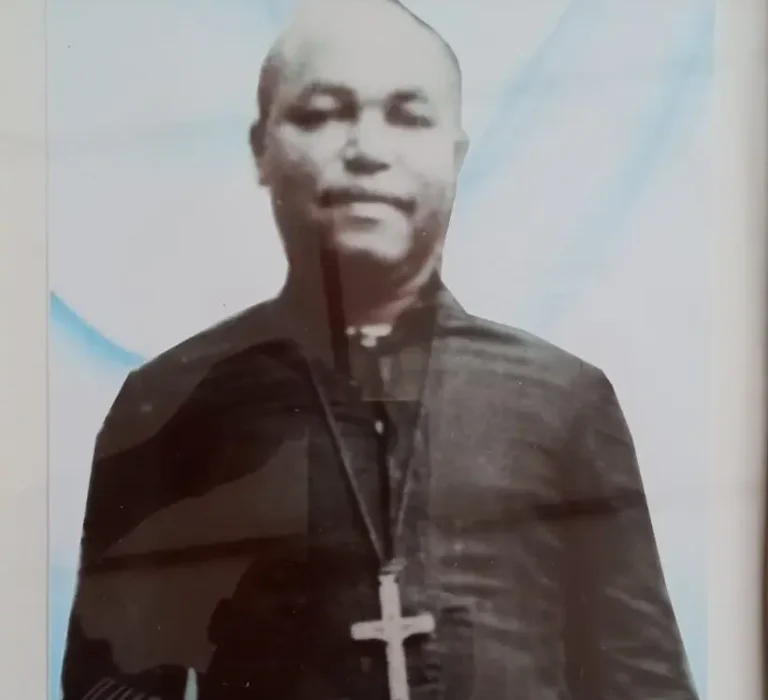
STEPHEN WAMBOGO NDUNE, PIONEER FOUNDER (CHARISMATIC FOUNDER).

Brother Stephen was born in 1923 in Gathai, Githaraga village Mugoiri location, Murang’a County, formerly Murang’a district. He was the son of Joseph Ndune and immaculate Njeri.

He was baptized on 24/12/1936 at Mugoiri Parish and confirmed on 11/10/1941 at St. Peter’s Claver parish Nairiobi. By then, St. Peter’s Claver parish was under the Holy Ghost fathers. He was employed as a catechist in the same parish in 1940s. as a catechist, he taught many catechumens for baptism, confirmation and holy communion and sacraments in general. Stephen had a desire to be a religious Brother.

He shared the idea with Fr. Cavanagh who was his employer and his parish priest. Fr. Cavanagh then went to discuss the matter with Fr. Whelan the vicar general and suggested that Stephen should go to Bagamoyo Tanzania where a religious congregation of Brothers had been founded since there was no Brothers’’ congregation in Kenya. When the idea of going to Bagamoyo was brought to Stephen, he expressed his desire to evangelize his own people which today would mean his local church.

After this discussion, they decided to send him to his homme vicariate of Nyeri where Fr. Michael Witte of Holy Ghost missionaries was in charge since the Consolata missionaries including Bishop Charles lee had been taken to exile in South Africa during the world war ll. With their response, Stephen wrote to Witte expressing his desire to become a religious Brother and the response from Fr. Witte came after six months where Witte invited him for a meeting in Nyeri. Stephen met Fr. Witte and they had a long discussion.

Fr. Witte sent Stephen to Fr. Umberto Bessone of consulate missionaries who had come back from exile and was in charge of St. Paul’s minor seminary for more dialogue and discernment. Bessone stayed with Stephen for some days in order to test his suitability. He concluded that Stephen was serious with his intention to become a religious Brother and released him to go back to Nairobi to finalize with his parish priest and employer and then go back to Nyeri to begin his long desired journey of becoming a religious Brother.

This was good news to Fr. Cavanagh, who accepted his resignation as a catechist, but at the same time, Fr. Cavanagh told him that before he released him, Stephen was to get another catechist who will take his place. And not just a catechist, but one who was as good as Stephen himself; morally, spiritually, emotionally, obedient and dedicated. It took Stephen another whole year to get credible young man who will fit into his shoes. Stephen was to train the new catechist to be; to the satisfaction of the parish priest. Fr. Cavanagh tested and interviewed the new catechist and found him fit to replace catechist Stephen. It is when Stephen was set free and allowed to go back to Nyeri.

For many years, Br. Stephen served the orphans who had been orphaned during the MAU MAU in Mathari Kanigini area. He worked so hard to return naughty boys especially those who tried to run away from the center to go back to the street. Br. Stephen could not rest until he convinced them to go back to the center. He had very high spirituality. Whenever he could pass by the catholic parish or chapel, he would request those with him “let us greet Jesus in the Eucharist for a minute”.


He was a man of deep prayer and faith. He had special love and reverence for the priests… he used to say, without the priest, there is no Eucharist. He had a deep devotion to the Virgin Mary. He always carried some rosaries with him to distribute to people in order to enhance the devotion to the blessed Mother of God.

He served King’ong’o prison for a long time. It is here that he encountered the veteran freedom fighter, Dedan kimathi whom he prepared for baptism and he became his sponsor and just few day, kimathi was hanged by the British Government.

Stephen served and received his vocation to Brotherhood while working as a catechist in St. Peter Claver parish in Nairobi. Yes, St. Peter’s Claver parish nurtured our founder and for this, St. Peter Claver parish has a share in the foundation of Brothers of St. Joseph. It is part of our rich history. As a congregation, we owe a lot to respect to this parish.

4

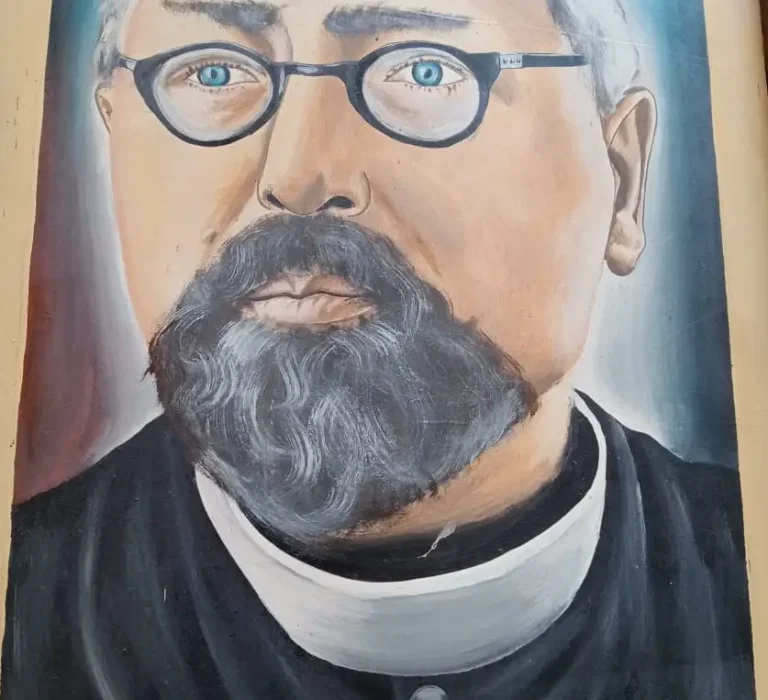
FR. JOSEPH MICHAEL WITTE, CSSp (JURIDICAL FOUNDER)

Fr. Joseph Michael Witte was a dedicated missionary who is remembered for his deep pastoral zeal, simplicity of life, and unwavering commitment to evangelization and human formation.

He served in the Archdiocese of Nyeri, Kenya, during a period when the local Church was in turmoil due to the world war ll and faced shortages of manpower  for evangelization, catechesis, and community development. In response to these pastoral needs, and inspired by the Spiritan charism of forming local Church leadership, he founded the Brothers of St. Joseph in 1945, an indigenous religious congregation intended to empower local men and women to participate actively in the work of the Church.

According to the “Europeans in East Africa” database, Michael (Joseph) Witte was born on 31 January 1895, in Burg, Texel, Netherlands.

  • He died on 24 March 1961 in Halfweg, Netherlands.
  • In his Spiritan missionary role, he was heavily involved in education in Kenya: in January 1925, he opened a teacher-training school at Kabaa, naming it “St. John’s Teachers College.” Holy Ghost Fathers Kenya.
  • He is well-known as a pioneer in Catholic education in Kenya, particularly for founding what later became Mang’u High School.
  • His commitment to education (teacher training, founding schools) suggests that he saw education as a critical part of mission strategy—not just evangelization, but building local capacity.

Fr. Witte can be described as:

  • A visionary missionary, able to read the signs of the times and respond creatively.
  • A man of prayer, whose spirituality was rooted in obedience, humility, and total trust in Divine Providence.
  • A practical man, who valued work, discipline, and self-reliance—virtues he wanted to instill in the Brothers.
  • Deeply committed to the African Church, believing strongly in the development of indigenous vocations and leadership.

His legacy lives on through the Brothers of St. Joseph, who continue to serve the Church and society in Kenya, carrying forward the missionary spirit he planted.